
I. Foreword: The Ambiguous Zone of the Seasons
March is the most honest month of the year. It neither pretends to still be winter nor rushes to declare itself spring. This state of suspension finds its most precise expression within the color spectrum of nail art—the deep hues of lingering winter have not yet fully exited the stage, while the pastels of early spring have already begun to tentatively infiltrate. You need not immediately abandon those vampy berry shades, nor do you need to force yourself to embrace the unadulterated sweetness of pastels. March nails should be a private negotiation regarding the nature of transition.
The thirty-four March nail art designs curated by Byrdie serve as a visual catalog of this very seasonal ambiguity. Ranging from “cat-eye” magnetic effects to terrazzo textures, and from neon fluorescents to velvet mattes, they compose a tableau far richer than any single trend could offer. What follows is a breakdown and reorganization of this chromatic revolution.
II. Technical Foundations: Mainstream Techniques for March 2026
1. Cat Eye (Magnetic)
The combination of magnetic polish and a magnetic wand causes the microscopic metal particles within the pigment to align along magnetic fields, creating a vertical band of light reminiscent of a cat’s eye. Lilac-toned versions are particularly well-suited for March—they retain the lingering wintry resonance of purple while simultaneously carrying the pastel breath of spring. The barrier to entry for DIY attempts is relatively low; however, if you lack confidence in manipulating the magnetic wand, professional salon services can ensure the light band appears perfectly straight and uniform.
2. Velvet & Glass
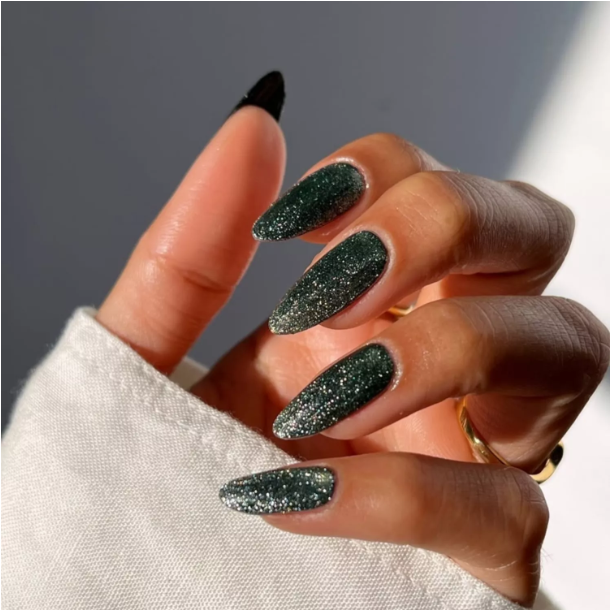
Velvet textures utilize magnetic or pearlescent metallic polishes to simulate the soft sheen of animal fur, while “Velvet Glass” layers a high-gloss topcoat over a velvet base to create a fluid, alternating effect of light and shadow. An “Oyster” (off-white) velvet base paired with a glitter shimmer serves as a safe, neutral choice for the month of March. ### 3. 3D Sculpting & Reliefs
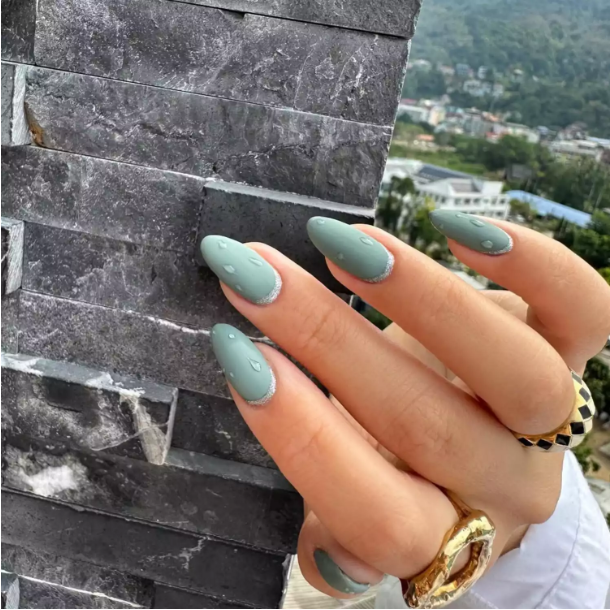
Water droplets, vines, bows, floral decals—in 2026 nail art, these three-dimensional elements are no longer mere accents, but the stars of the show. The key lies in a “suspended effect”: velvet or jelly base coats allow the edges of these appliqués to blend seamlessly, creating the illusion that they are growing organically from within the nail surface itself.
4. Jelly Texture
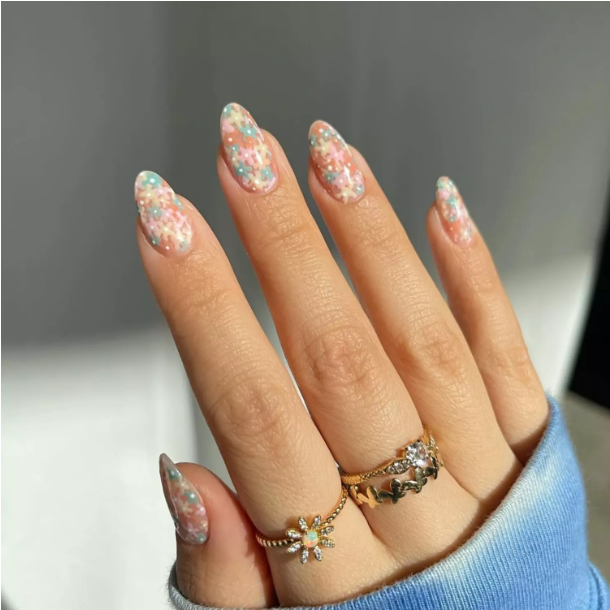
Applying multiple thin layers of translucent polish creates a sheer, gummy-like transparency. “Jelly Skittle Nails”—featuring a rainbow of colors—harness this sheer texture to temper highly saturated hues, ensuring they appear airy and light rather than heavy under the March sunlight.
5. Chrome Powder & Mirror Finish
White chrome powder layered over a pearlescent pink base creates a metallic luster that is more refined than glitter yet softer than a true mirror finish. This variation of “Princess Pink” serves as a contemporary interpretation of March’s romantic aesthetic.
III. The Color Spectrum: A Transition from Cool to Warm Tones
The Cool Camp: Winter’s Final Stand
Frosted Sage: A grayish-green shade infused with shimmer. It suits any nail length or shape, though short, rounded nails best accentuate its fresh, crisp quality. For those in March who aren’t quite ready to fully embrace pastels, this serves as the perfect transitional choice.
Periwinkle: When used as a base color and paired with black-and-white Pop Art patterns, it creates a harmonious “mismatched” aesthetic. This blue-violet hue frequently appears in the March sky; translating it onto your fingertips offers the most intuitive way to respond to the changing season.
Royal Blue & Mint: An asymmetrical take on the two-tone French manicure—one side deep blue, the other light mint, with varying lengths on each edge. This “two-toned graphic” technique utilizes sharp geometric lines to cut through the potential cloying sweetness of pastel shades. ### The Warm-Toned Camp: Spring Arrives Early
Neon Green: A highly saturated, low-blue fluorescent green—the loudest declaration that “winter is over.” It requires no embellishment; a solid block of color is sufficient. It is DIY-friendly; simply ensure your nail polish reaches a super-saturated consistency.
Peach & Tangerine: A gradient achieved through airbrushing techniques, layered with barely-there lines and accented by gold leaf details along the sides. While this warm-toned combination feels avant-garde for March, it is precisely this “premature” quality that elevates it to the status of a true style statement.
Hot Pink Gradient: A fade that transitions from the nail bed to the tip—neither possessing the loud boldness of a solid color nor the fussy complexity of intricate nail art. It offers a “fun and unexpected” interpretation of pink, perfect for those who have grown weary of the monotony of solid colors.
The Neutral Camp: A Return to Earth and Nature
Fawn Print: The spot trend currently sweeping the fashion world makes its debut in the nail art realm via a “negative space” half-moon design—leaving the nail bed bare while covering the remainder with soft, Bambi-esque spots. This offers a gentle, softened take on animal prints, sidestepping the aggressive intensity often associated with leopard print.
Terrazzo: A pattern of scattered stone fragments set against a deep green base, achievable through either nail decals or freehand painting. Its DIY-friendly appeal lies in the fact that the more irregular the pattern, the more natural the result looks. This serves as the most direct visual link between the month of March and the theme of “nature.”
Striped Marble (Earth Tones): When the viral Terrazzo trend is rendered in earth tones, it shifts from the loud and boisterous to the calm and grounded. Flowing textures in shades of brown, camel, and oat evoke the thawing earth of early March.
IV. The Design Lexicon: A Spectrum from Minimalism to Maximalism
The Minimalist End
Simple Coquette (Velvet Bow): A pearl-pink velvet-finish manicure, accented solely by a single silver bow. This represents the 2026 remnants of the “coquette” aesthetic; however, the velvet texture tames the saccharine sweetness, keeping the look grounded in “refined playfulness” rather than “excessive cuteness.”
Half-and-Half Wave: Featuring a light-colored base, a fine-tip brush outlines the wavy dividing line; after filling in the contrasting color, the design is finished with a glossy topcoat. It is one of the simplest DIY options, yet it visually creates a complex sense of dynamic movement.
Micro Nail Art: Set against a lavender jelly base, this design combines ultra-fine stripes, minuscule dots, and a minimalist reverse French tip. It represents an extreme form of the “less is more” philosophy—requiring a nail artist’s steady hand—but the result is nothing short of jewelry-like.
The Maximalist End
Museum-Worthy Moment: An Yves Klein blue base is accented with green, baby pink, bright yellow, and abstract dots. The ambition behind this manicure lies in its refusal to be pigeonholed into any single style; instead, it exists as a wearable miniature painting.
Dainty Decadence: Each finger features a distinct 3D element—glitter French tips, chrome powder accents, or sculpted floral details—unified by a neutral base color. This “curated mismatched” aesthetic serves as a signature stylistic grammar within 2026 nail culture.
Color Pop: A quartet of colorful tips, swirling patterns, floral designs, and a neutral base. Its secret to success lies in the use of “light colors to tie it all together”—employing soft tones as a visual adhesive to prevent the intricate details from devolving into chaos.
V. French Variations: The Thirty-Four Reincarnations of a Classic
In March, the French manicure experienced an unprecedented boom in variations:
- Floral French: Delicate floral motifs in light blue and soft green are applied exclusively along the “smile line,” preserving the structural integrity of the classic French manicure while infusing it with the essence of spring. – Double French: A layered design featuring a broad band of Kelly green paired with a delicate gold outline—a reinterpretation of the classic French manicure that marries the natural associations of green with the luxurious allure of gold.
- Reverse French: Silver accents adorn the base of the nail rather than the tip; paired with seafoam-green teardrop motifs, this style creates a contemporary aesthetic that plays upon negative space.
- Ombré Sorbet: A seamless fusion of pastel color blocks creating a soft, cloud-like haze—the quintessential “springtime” expression of the French manicure for the month of March.
Ultimately, your March manicure should mirror the month of March itself—belonging wholly to no single season, yet possessing a unique authenticity precisely for that reason. When your fingertips simultaneously carry the lingering depth of winter and the tentative stirrings of early spring, you have mastered the true grammar of transition: not an abrupt, either-or leap, but a fluid, organic gradation where one state gently unfolds into the other.

