
I. Foreword: The “Non-Betrayal” Philosophy of Base Makeup
Hidden within base makeup products lies a subtle power dynamic—they cloak your skin, yet constantly face the peril of exposure. Oiliness, fading, dullness, caking—these terms act like lurking traitors, poised at any moment to betray the twenty minutes you spent in front of the mirror that morning. Thus, when a foundation promises the freedom of “never needing a second check,” it is, in reality, promising something far deeper: the ability to let you forget you are wearing makeup at all.
The NARS Natural Matte Longwear Foundation, launched on February 19th, enters the market bearing precisely this promise. Its name is straightforward to the point of being almost clunky—”Natural Matte Longwear Foundation”—yet it precisely anchors itself to the two major anxieties currently dominating base makeup consumption: the need for a matte, oil-controlling finish without the “mask-like” sensation; and the demand for long-lasting coverage that still allows the skin to feel as though it can breathe.
II. The Founder’s Ghost: “Less Is More” in the 90s
The spiritual lineage of this product can be traced back to the aesthetic legacy of the brand’s founder, François Nars. In a teaser post on Instagram, Nars revisited the revolutionary stance held by the makeup artist in the 1990s: “Skin should still look like skin—enhanced, but never obscured.” That “less is more” philosophy of base makeup—which felt jarringly out of place in an era where heavy coverage was the mainstream—nonetheless precisely predicted the aesthetic shift that would unfold over the subsequent thirty years.
Attached to the post was a handwritten note: “True freedom is knowing your skin looks good without ever having to second-guess it.” This sentence serves as the emotional anchor for the entire product narrative. It speaks not of “perfection,” but of “assurance”; it promises not a “transformation,” but “peace of mind.” In an era where social media magnifies every inch of skin imperfection, this appeal for a base makeup that “does not betray” may well be more compelling than any amount of coverage power. —
III. Formula Breakdown: A Serum-Like Texture Across 46 Shades
Core Architecture
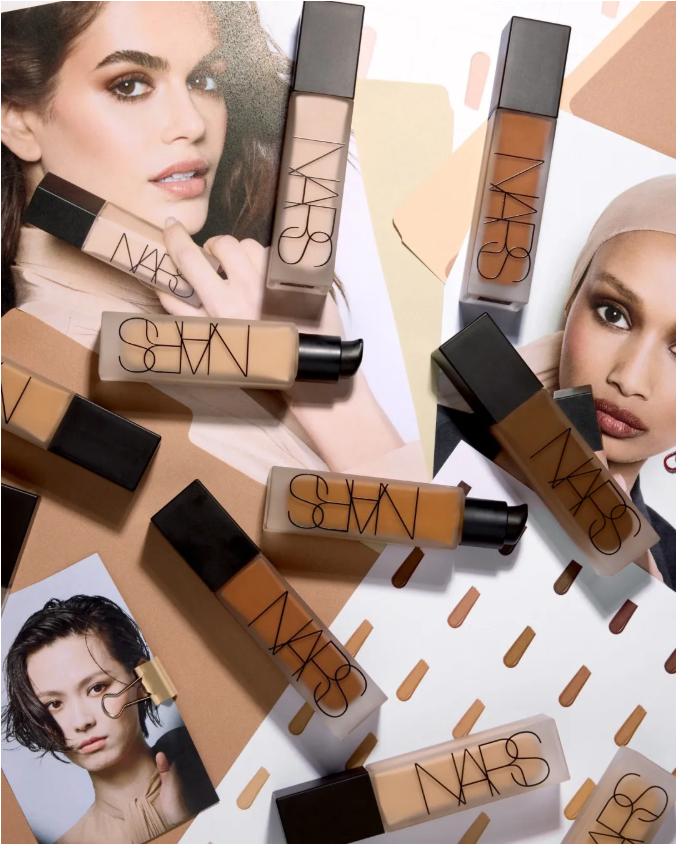
The product launches with 46 shades, spanning the entire spectrum of skin tones from the very fair to the very deep. Its core promises include: up to 24 hours of wear, oil control and shine reduction, and a “soft-focus” effect that visually blurs pores and refines skin texture. These features are not inherently novel—long-wear durability and oil control are standard expectations for matte foundations—yet NARS attempts to strike a balance between the traditionally somewhat contradictory concepts of “natural” and “matte.”
Texture and Feel
In her review, Byrdie Senior News Editor Bella Cacciatore used the term “serum-like” to describe the product’s fluidity. This texture suggests a lightweight spreadability, standing in contrast to the heavy, paste-like consistency often found in many matte foundations. It promises “true medium coverage”—sufficient to mask redness and blemishes without creating a stark, mask-like demarcation between the face and the neck.
The Inclusion of Active Ingredients
The formula is infused with niacinamide and peptides. Niacinamide’s efficacy in controlling oil and minimizing pores has been substantiated by extensive research, while peptides point toward a long-term promise of anti-aging benefits and skin texture improvement. The brand claims that, after two weeks of continuous use, visible improvements can be observed in both pore appearance and skin texture. This positions the foundation not merely as a “concealing” tool, but rather as a “therapeutic makeup” product that blurs the lines with skincare—though the actual concentration of these active ingredients, and thus their clinical efficacy compared to professional-grade skincare products, remains subject to independent verification.
IV. Field Notes: An Editor’s Honest Confession
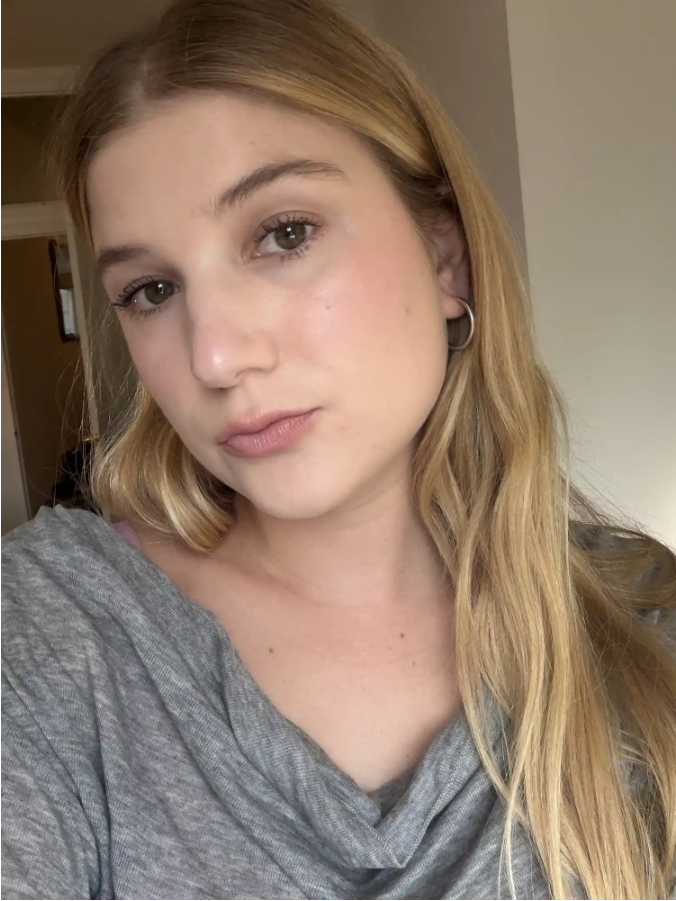
Cacciatore’s review is marked by a rare degree of candor; she admits that she typically approaches the word “matte” with trepidation—especially during the winter months—and openly acknowledges that the specific shade she tested was slightly too dark for her complexion. Paradoxically, these less-than-perfect testing conditions lend even greater credibility to her subsequent positive assessment. She described how the foundation “glided over the skin,” effectively neutralizing the redness caused by hormonal acne—without the need for additional concealer—while maintaining a finish that was a “soft-focus matte with a sense of life.” It wasn’t the kind of dead, flat finish that drains away all light; rather, it offered a soft-focus effect that preserved the subtle contours and texture of the skin. After wearing it all day, it showed none of the “caking or cracking” she had feared; instead, it presented a “remarkably airbrushed finish.”
What makes this review particularly interesting is that it captures a quintessential mindset within contemporary base makeup consumption: consumers no longer chase the extreme ideal of “zero flaws,” but rather seek options that allow them to toggle between “days when a little extra coverage is needed” and a “light, everyday look.” She positioned this foundation as her “go-to choice for those days when a little extra is required”—not a daily staple, but a reliable ally for specific occasions.
V. Market Positioning: The Crowded Lane of Matte Foundations
In the 2026 base makeup market, matte foundations are hardly a rarity. From high-end lines like Estée Lauder Double Wear to drugstore favorites like Maybelline Fit Me Matte, the category defined by oil control and long-wear performance represents one of the most fiercely competitive “red oceans” in the industry. NARS’s entry strategy involves using “natural” as a differentiating prefix—not merely “matte,” but “natural matte”; not just “coverage,” but “soft-focus.”
This semantic fine-tuning reflects the brand’s precise grasp of consumer psychology. Today’s base makeup users—particularly Millennials and Gen Z—harbor an instinctive wariness toward a “heavy, cakey makeup look.” Having been through the evolutionary cycles of BB creams, cushion foundations, and “bare-face creams,” their obsession with “looking like they aren’t wearing makeup” sometimes even outweighs their actual need for high coverage. NARS’s positioning—offering “soft-focus skin in a bottle”—is a direct response to this very mindset.
VI. Redefining “Freedom”
The concept of “freedom” that François Nars once jotted down on a note takes on a more complex dimension within the context of 2026. It is no longer merely the courage to “go bare-faced,” but rather the composure that comes from knowing that, even when you choose to wear makeup, you don’t have to spend your day constantly worrying about it. The 24-hour wear and soft-focus finish promised by this foundation essentially sell a form of cognitive relief—the freedom to attend meetings, go on dates, or check your reflection in the subway without having to constantly engage in an anxious self-assessment: “Is my base makeup still holding up?”
Of course, this freedom comes at a price. As a prestige brand, NARS’s pricing naturally distinguishes it from the mass market. Yet, for consumers willing to pay a premium for the certainty that their makeup “won’t let them down,” this may well be a value proposition far more compelling than any ingredient list.
After all, in the world of base makeup, the most expensive commodity is never the product itself—but rather the luxury of being able to forget it’s even there.

