
I. Foreword: A Renegotiation of “Length” and “Shape”
The narrative of nail art is currently undergoing a silent coup. Over the past few years, ultra-long extensions and dramatic elongations once dominated social media—styles like Coffin, Stiletto, and Ballerina; names that, in themselves, carried a certain aggressive edge. However, within the nail art landscape of 2026, a more restrained aesthetic is reclaiming lost ground. This isn’t a complete retreat of length, but rather a shift in focus where shape takes precedence over size.
Allure‘s summer trend report notes that this season’s biggest nail art trend centers on the “tactile experience”—ranging from rippling waves to ridged shell textures, designs are no longer solely chasing visual impact, but instead invite the touch of the fingertips. This displacement from “viewing” to “perceiving” suggests that the philosophy of nail art is shifting its foundation from performativity toward everyday practicality.
II. The 2026 Shape Lineup: Seven Silhouettes Worth Committing To
1. Short Almond: The Uncrowned King of the Season
The Almond shape—narrowing toward the center on both sides with a soft, oval tip—makes a powerful comeback in the spring of 2026 in a “shortened” iteration. Green Wedding Shoes‘ trend observations list it as “this season’s most popular shape,” citing its qualities as “elegant, classic, and suitable for almost everyone.” The shortened Almond retains the visual effect of elongating the fingers while shedding the maintenance burden and practical drawbacks often associated with long extensions.
Teen Vogue similarly confirms that the Short Almond and Oval shapes are leading the spring trends, describing them as “refined, practical, and modern.” The resurgence of this shape echoes the fashion context of “Quiet Luxury”—it implies a sophistication that requires no fanfare, an instinctive aversion to excessive ornamentation.
2. Oval: The Timeless Middle Ground
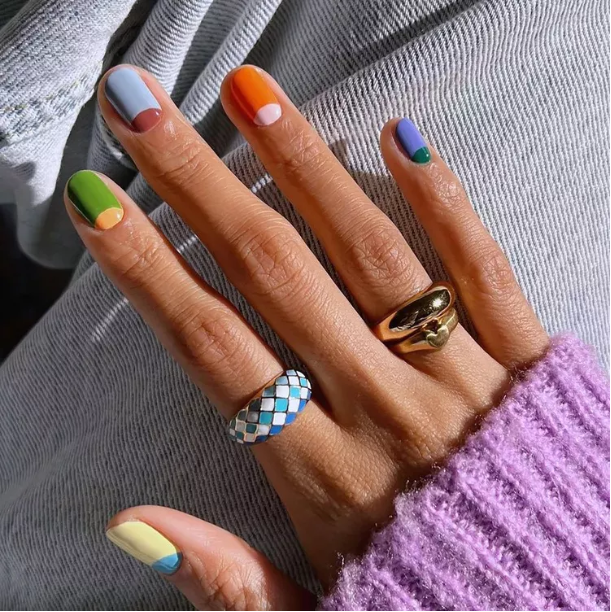
The Oval is a close relative of the Almond shape; the distinction lies in its rounder tip and a gentler tapering along the sides. It is one of the most universally flattering shapes, suitable for almost any nail bed width and finger proportion. The 2026 iteration emphasizes “short to medium lengths,” paired with sheer nude or milky pastel tones to create an impression of being “meticulously cared for” rather than “elaborately designed.”
For mature hands, the Oval and Squoval (see below) shapes are particularly recommended, as excessively long nails can accentuate knuckle width and the texture of the hands. This is a truth long overlooked by youth-centric nail culture: nail shape is not merely a stylistic choice, but also an age-conscious strategy.
3. Squoval: The Reconciliation of Square and Round
A hybrid of the Square and Oval—featuring a flat top with slightly rounded corners—the Squoval serves as the physical embodiment of the 2026 “minimalist” wave. It retains the modern sensibility of the square shape while avoiding the aggressive edge associated with sharp corners. Within the context of the short-nail renaissance, the Squoval—paired with soft hues such as milky blush or sky blue—has become a staple of the “clean girl aesthetic.”
The practical advantages of this shape cannot be overlooked: it is more durable than the Almond shape and less prone to snagging on clothing than a pure Square, representing a pragmatic compromise between daily functionality and aesthetic expression.
4. Coffin: The Dramatic Holdout
Despite the surging trend toward short nails, the Coffin shape—a trapezoid featuring a flat top that tapers toward the tip—has yet to exit the stage. Its presence in 2026 is more strategic: no longer the default choice, but rather “the choice you make when you want to stand out.” Paired with pastel French tips or 3D floral embellishments, the Coffin continues to play the role of a “statement piece” at events such as weddings and parties.
However, its popularity has clearly ceded ground to softer shapes. This decline is not a matter of aesthetic obsolescence, but rather a consequence of lifestyle shifts: with remote work becoming the norm, the practical ease of typing on a keyboard has re-emerged as a subtle yet significant factor in nail-care decision-making.
5. Natural Round: Minimalist Elegance
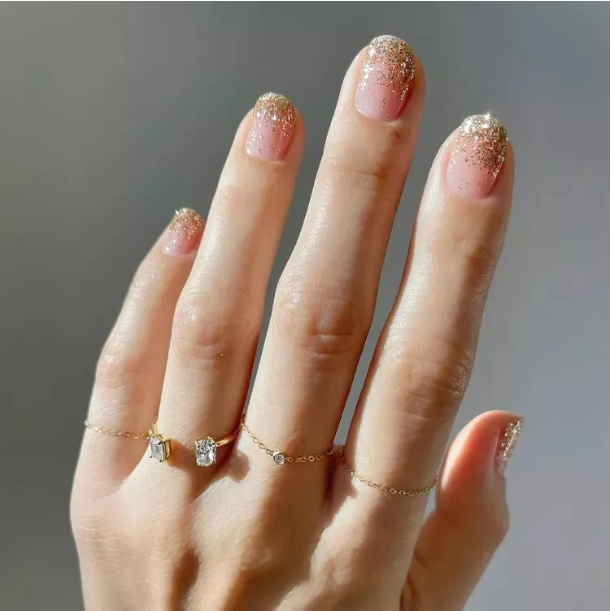
The shape that most closely mimics the natural growth pattern of the nail bed, characterized by a perfectly rounded arc at the tip. It requires almost no professional shaping and entails extremely low maintenance costs, yet in 2026, it has been imbued with renewed aesthetic legitimacy. As the “no-makeup makeup” aesthetic spreads from facial cosmetics to the realm of nail art, the Natural Round shape emerges as the physical embodiment of the “your nails, but better” philosophy.
When paired with a “glazed donut” or “milky” finish, the Natural Round shape creates a sense of sophistication that borders on transparency—conveying not “I got my nails done,” but rather, “My nails are naturally this healthy.”
6. Square: Retro Angles
The pure Square shape—characterized by a flat top edge and sharp corners—carries a certain retro, defiant edge in 2026. It evokes the nail salon aesthetics of the 1990s, with their unapologetically artificial vibe. In the current climate where “softness” reigns supreme, choosing the Square shape serves as a deliberate stylistic statement: a rejection of rounded, crowd-pleasing softness in favor of stark, geometric austerity.
However, its practical drawbacks—namely, its susceptibility to breaking and snagging—prevent it from becoming a mainstream daily choice; instead, it tends to appear primarily within specific stylistic subcultures.
7. Stiletto / Almond Stiletto: Lingering on the Fringe
The ultra-sharp Stiletto shape has become largely marginalized in 2026, appearing only in the most extreme expressions of maximalist nail art. A softer variant—the Almond Stiletto (an almond base with a slightly sharper tip)—occasionally surfaces in niche corners of social media trends, but it is no longer a mainstream request at nail salons.
III. The Symbiotic Relationship Between Shape and Design
The nail art design trends of 2026 engage in a fascinating dialogue with the shifting landscape of nail shapes:
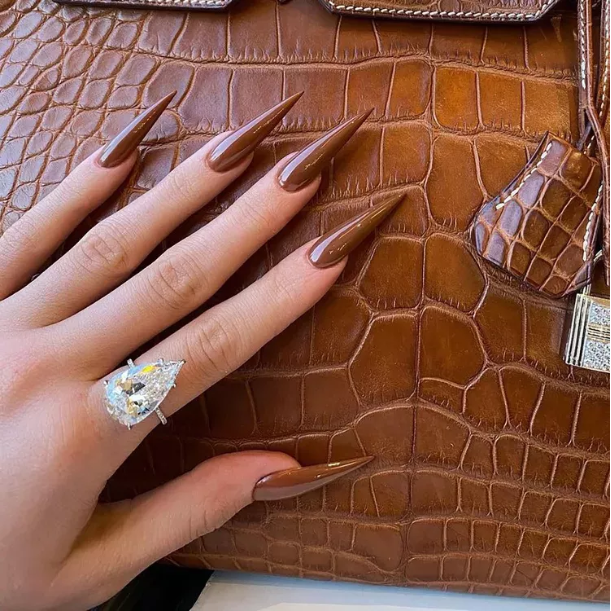
Micro French Tips look their absolute best on short Almond or Squoval shapes; excessive nail length can make the delicate white line appear disproportionate, whereas shorter shapes lend it a sense of refined restraint. Similarly, 3D floral and sculptural elements are best suited for medium-length Almond shapes, as the ample surface area provides a stable foundation for three-dimensional embellishments without the design becoming cumbersome or unwieldy due to excessive length. Milky Pastels and Glazed Finishes pair harmoniously with almost every soft nail shape—short almond, oval, squoval, and natural round. Together, they construct a “glass-like,” delicate aesthetic that stands in natural opposition to sharper, more angular shapes.
IV. Selection Guide: Tailoring Shape to Hand
Ultimately, choosing a nail shape is a personal calculation involving both proportion and functionality.
For Shorter Fingers: Almond and oval shapes offer the best elongating effect, visually extending the lines of the hand. Avoid overly wide square shapes, as they tend to visually compress—rather than enhance—already limited finger length.
For Wider Knuckles: Soft oval or almond shapes help to soften the prominence of bony knuckles. Sharp, angular shapes tend to create a jarring visual dissonance against more angular finger joints.
For Active Lifestyles: Squoval and natural round shapes are the most practical choices. They are less prone to breakage, cause fewer snags when dressing or undressing, and require less frequent maintenance.
For Mature Hands: Short-to-medium length oval or squoval shapes are widely recommended by professional nail technicians. Excessively long nails can accentuate skin texture and signs of aging, whereas soft shapes paired with sheer nude tones create an impression of being “meticulously cared for” rather than “overly embellished.”
V. Shape as Attitude
The shift in nail shape trends for 2026 can perhaps be interpreted as a microcosm of a broader cultural mood: a transition from conspicuous consumption to quiet contentment; from social media performance to everyday pragmatism; from “Look at me!” to “Here I am.” The rise of the short almond shape is not a rejection of long nails, but rather a gentle act of resistance against the tyranny of feeling compelled to constantly demand attention.
When the shape of our fingertips once again harmonizes with the bone structure of our hands, the rhythms of our daily lives, and our own personal temperament, nail art transcends its role as mere external ornamentation to return to its true essence: a form of authentic, internal self-expression. After all, the best manicure is the kind that makes you smile inwardly when you occasionally glance down—while typing, holding a coffee cup, or turning the pages of a book—rather than the kind that requires you to deliberately lift your hands to put them on display for the world.
In this sense, the “Shape Revolution” of 2026 is, at its core, a subtle declaration of freedom: the freedom to choose less dramatic silhouettes, and the freedom to let beauty serve life, rather than dominate it.

