
I. Foreword: A Gentle Inversion of “Inside” and “Outside”
The beauty industry has long excelled at crafting myths surrounding the “surface”—more flawless foundations, more striking lip colors, more sculpted contours. Packaging and advertising serve as the frontline soldiers of this narrative, while formulas and ingredients retreat to the background—much like the unseen prop masters in a theater. Yet, in early 2026, a brand that had quietly held its ground within the U.S. mass-market cosmetics sector for years suddenly decided to shift the conversation, bringing “the inside” into the spotlight.
This campaign, titled “What’s Inside Is Everything,” represents not only Milani Cosmetics’ first major brand-level statement in recent years but also a subtle challenge to the prevailing discourse within the mass-market beauty sphere. It attempts to answer a seemingly simple question: When a consumer stands before the shelves of a drugstore, beyond the allure of price points and shade ranges, what else is truly worthy of their trust?
II. The Brand’s Foundation: Seventeen Quarters of Sustained Growth
Any shift in brand philosophy requires solid business performance to serve as ballast. At the campaign’s launch, Milani CEO Mary van Praag revealed that the brand has consistently outperformed the broader U.S. mass-market cosmetics sector for seventeen consecutive quarters, climbing from the tenth to the seventh spot in the industry rankings—making it the only independent brand within the top ten. This growth was not driven by mergers, acquisitions, or financial wizardry, but rather represents the cumulative result of “disciplined investment in product innovation, storytelling capabilities, and demand creation.”
This explains why Milani chose this particular moment to “slow down” and focus on quality. A brand still in its growth phase is typically preoccupied with expanding its SKUs and distribution channels; it is only when growth settles onto a sustainable trajectory that a brand finds the opportunity to turn inward and examine the fundamental question: “Who am I?” Van Praag characterizes this brand refresh as a “prudent step in our evolution”—not a radical disruption, but rather a process of refining and bringing into sharper focus the elements that have already contributed to the brand’s success. —
III. The Core Grammar of the Campaign: From “How It Looks” to “What It’s Made Of”
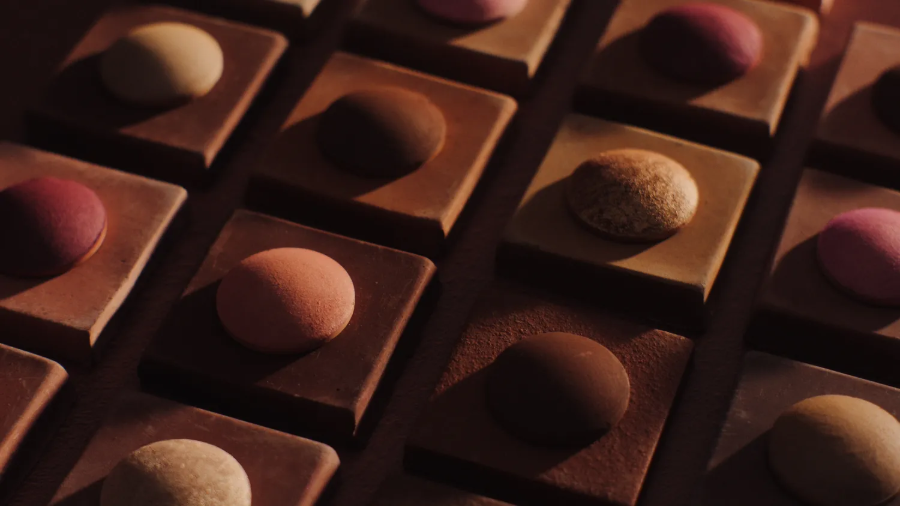
The creative execution of “What’s Inside Is Everything” was helmed by London Alley, a subsidiary of Vice Media. Director Boni Mata turned the lens toward a more intimate aesthetic perspective—envisioning a world less fixated on external standards and more deeply rooted in self-confidence and individuality. This choice of tone is intriguing: it eschews the “transformation” narrative common in mass-market cosmetics (the classic “before-and-after” trope), nor does it enlist celebrities to perform the illusion of flawless makeup. Instead, it allows the product itself to take center stage, making its ingredients and craftsmanship the driving force of the story.
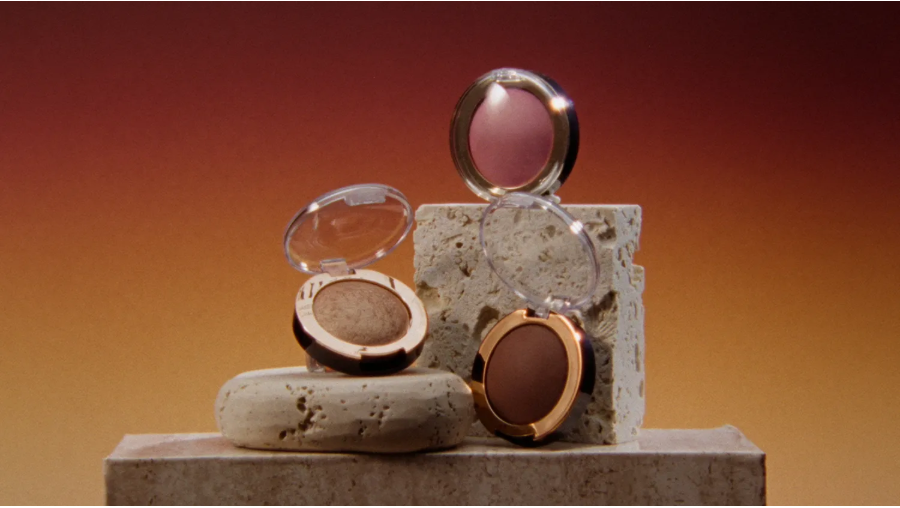
The campaign’s launch vehicle is Milani’s most recognizable offering: the Baked Collection. Since its debut in the spring of 2011, this collection has remained a cornerstone of the brand’s portfolio and stands as the leading franchise for baked blushes and bronzers within the U.S. mass market. The 2026 iteration is no mere re-release; the formula has been enriched with grape leaf extract and Vitamin E-rich olive fruit oil, the packaging has undergone a complete redesign, and the shade range has been expanded to encompass a broader spectrum of skin tones and undertones—spanning both cool and warm profiles.
These products undergo a unique baking process on terracotta clay pans within Italy’s renowned “Makeup Valley”—a region where local artisans blend traditional techniques with modern innovations to produce cosmetics boasting a rich pigmentation and blendability that rival high-end prestige brands. The true brilliance of this campaign lies in its ability to transform a narrative originally hidden deep within the supply chain into a tangible value that consumers can perceive and discuss.
IV. The Synchronized Evolution of the Product Line: Beyond Baked Goods
A brand refresh is never a singular, isolated event. Coinciding with the launch of the campaign, Milani also released two new products: the Make It Last Moisture Boost Alcohol-Free Setting Spray and the Highly Rated Fan Club Fanning Mascara. The former continues the brand’s steadfast commitment to “alcohol-free” formulations—while the alcohol bases commonly found in setting sprays offer quick-drying benefits, they can exacerbate the sensation of tightness in dry skin. The latter, meanwhile, responds to consumers’ enduring demand for lashes that are “perfectly separated and buildable” through the design of a fan-shaped brush head.
Chief Marketing Officer Jeremy Lowenstein’s remarks reveal a deeper strategic intent: “Today’s beauty consumers are multidimensional and discerning; they value quality and authenticity that go beyond the surface.” This statement points to an ongoing industry shift: mass-market beauty brands are no longer content with the subordinate status of merely serving as “affordable alternatives” (dupes); instead, they are striving to establish independent value propositions—aiming to “elevate the standards of the mass category and create a ‘timeless beauty’ that transcends fleeting trends.”

V. Channels and Community: Extending from Shelf to Experience
The campaign’s media matrix spans digital, social, and streaming platforms—ranging from MilaniCosmetics.com to TikTok, Instagram, and Pinterest, and extending to Amazon Media and Prime Streaming TV. While such omnichannel coverage is standard practice for mass-market brands, the consumer pop-up event hosted by Milani in Los Angeles in late February added a more immersive dimension to the mix.
Centered on “creator-led storytelling,” the event brought the individual depth and uniqueness of beauty consumers to the forefront. This approach resonates with data regarding the brand’s influencer marketing efforts in recent years: analysis by Modash reveals that Milani is highly active on TikTok, averaging approximately 660 pieces of sponsored content per month. Furthermore, 43.8% of its collaborators have an average view count of under 1,000—indicating a brand strategy that prioritizes “niche reach and authenticity,” fostering relationships with small-to-mid-tier creators through gifting and affiliate models.
This “decentralized” approach to community management forms a logical loop with the “intrinsic value” emphasized throughout the campaign: when a brand no longer relies on a single celebrity face to define beauty, but instead empowers hundreds—even thousands—of real users to share their personal experiences, the concept of “What’s Inside” expands beyond mere product ingredients to become woven into the very fabric of the brand’s community culture. —
VI. Industry Context: The “Refresh” Wave of 2026
Milani’s pivot is not an isolated incident. In early 2026, Simple updated its global brand identity system; Living Proof announced the narrative for its “next chapter” on LinkedIn; and Nexxus unveiled a new visual identity on Instagram. The beauty industry appears to have collectively entered a “refresh cycle”—not merely the routine marketing of launching new product lines, but a fundamental re-examination and re-expression of core brand values.
Underlying this collective behavior is a profound shift in consumer attention. After experiencing the “skincare awakening” of the pandemic era—alongside the accompanying clamor surrounding “clean beauty”—the market is now seeking a more mature mode of dialogue. This approach neither fetishizes natural ingredients nor demonizes chemical formulations; instead, it returns to simple, pragmatic criteria: “Is the product effective? Is the craftsmanship excellent? Is the brand honest?” Milani’s campaign taps into this context at precisely the right moment; the “inside” it speaks of refers simultaneously to the physical formulation itself and to the bond of trust—one requiring no excessive embellishment—that exists between the brand and the consumer.
VII. The Question of Dignity in Drugstore Beauty
For a long time, an implicit hierarchy has existed within the mass beauty market: prestige counter brands are tasked with selling “dreams,” while drugstore brands are relegated to providing “utility.” Milani’s campaign seeks to blur this boundary. Rather than allowing consumers to feel they are making a compromise when choosing affordable products, it imbues that choice with a sense of agency: “I understand the ingredients; I trust the craftsmanship; I am paying for my own discerning judgment.”
Establishing this sense of dignity may hold far greater long-term value than the sales figures of any single product. When the kiln-baked technique behind the Baked Blush is framed as a story worthy of respect—and when the gentle nature of the alcohol-free setting spray is elevated to a status equal in importance to its efficacy—Milani is, in effect, redefining the narrative grammar of mass-market beauty. The new mantra is not “get similar results for less money,” but rather, “get a thoughtfully crafted product at a reasonable price.”
On the beauty shelves of 2026, this grammatical shift is quietly taking place. And Milani’s “What’s Inside Is Everything” may well be just the opening sentence of a much longer conversation.

